 Enlarge
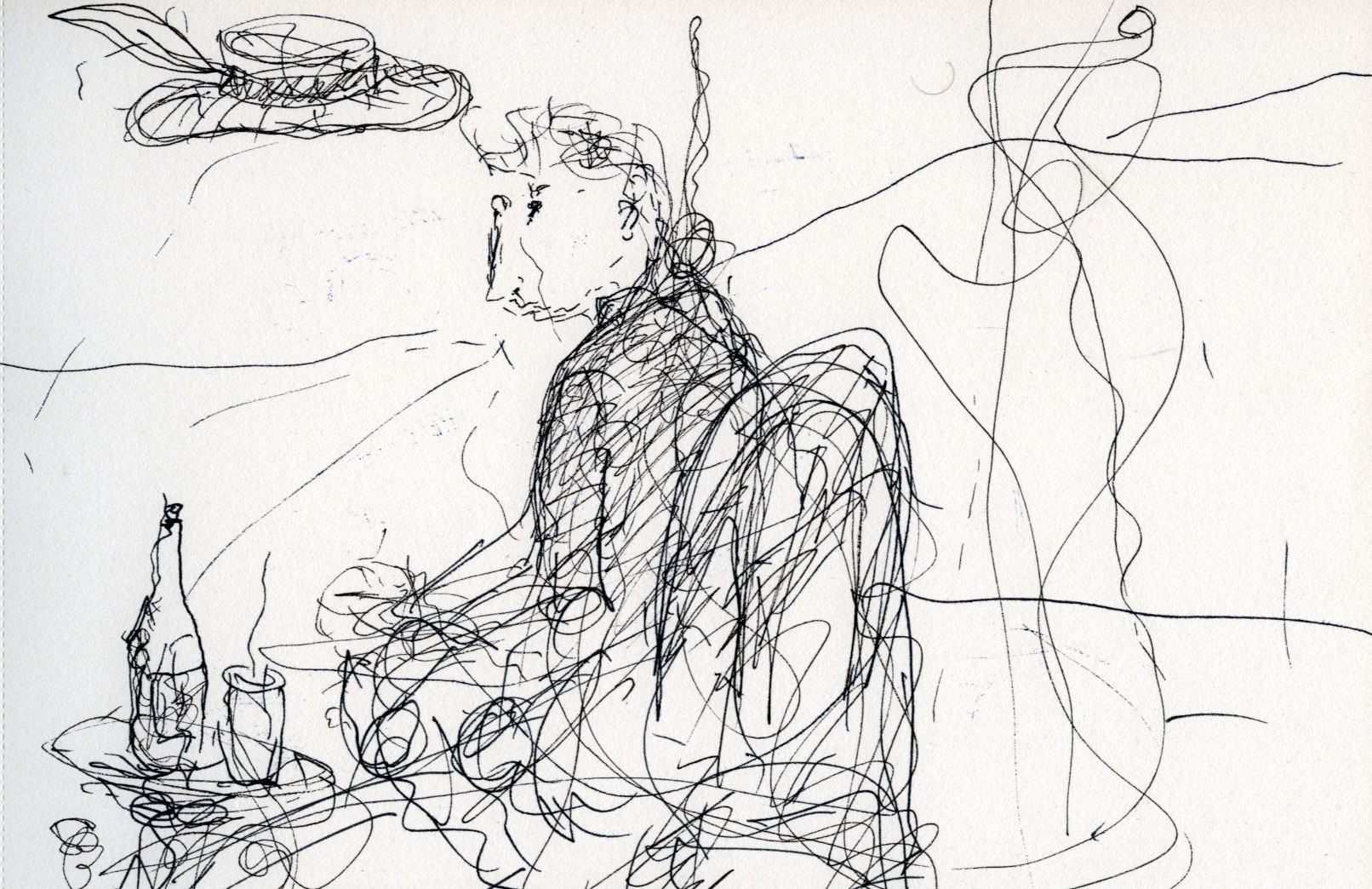
Melancholy
Ireland recently got itself talked about (April 2026, for a second round of support) by offering a monthly wage to a fixed but not negligible number of artists.
The Basic Income for the Arts : €1,300 net per month awarded to 2,000 artists drawn by lot, with no obligation as to results, over three years. A communications exercise that was also intended as a socio-economic experiment, with a whole monitoring apparatus to measure its effects on society. There is talk of virtue, of a virtuous circle; the arrival of foreign delegations is trumpeted.
This echoes an earlier Irish interventionist initiative: from the 1960s, the tax exemption for writers, most recently codified by the 1997 Act. But that was a simple tax break — not levying wealth already created.
It did nothing to bring forth a Joyce or a Beckett, but it gave Ireland the image of a land of writers, a godsend at a time when the green island was still known mainly for its sheep and the IRA.
Today the aim is to turn the artist into a civil servant, on the presumption (written almost in these terms in the press release) that he needs the State in order not to suffer. A placing under guardianship that dares not speak its name. (Always be wary when a state concerns itself with suffering — cf. the law on euthanasia!)
With, as the benefit to the state that is put forward, a logic of Keynesian inspiration: hand out a little money to avoid spending more, notably by saving on the health of a population presumed to be precarious.
Beyond the questionable economic premise, the fundamental question remains that of the role of the artist. As he sees himself, as he is seen. Can one be an artist beholden to the State, or is it better to remain a free and independent dauber?
Is state aid economic emancipation, or a perverse and annihilating bond?
If being an artist is a permanent and immanent state rather than a status conferred, then any link with the State can only be harmful.
To receive a privileged status, even a temporary one, with a numerus clausus (the only pleasing thing in this story is the drawing of lots) has something of an incongruous state office about it, which raises questions about the real design of whoever grants it.
Saving money while helping creation?
Really? From my point of view, all the French experiments in support for creation (FRAC, advances on receipts, the intermittent-worker scheme) have long since shown their limits, both in their results and in the questionable windfall effects for their beneficiaries. Mediocrity and inflation of production, the creation of a detestable caste, market distortion. A minority rejoices in it, consuming this system and holding the levers needed to perpetuate it.
After a century of cinema, a century of industrial art and nearly a century of citizens' theatre, this is probably the end of a cycle of creation, and the loss of breath would come from that end of cycle far more than from state intervention. But it remains no less true that the State has no business there, at the risk of killing that creation as surely as protection and inheritance policies ended up nailing down the coffin of agriculture and industry.
In a world where thought is well domesticated (protection laws, European chat control, self-censorship, the bill on domestic interference, memory laws) and with the lightning advent of generative AI, that which belongs to the un-thought — pre- or para-verbal artistic intuition, from which unprecedented visions can arise — offers a powerful, low-cost space of freedom, to be protected as a matter of urgency.
Very far from State intervention.
This Irish initiative looks too much, in its form, like a first step towards universal income and, in substance, like an attempt to cushion creative chaos.