 Enlarge
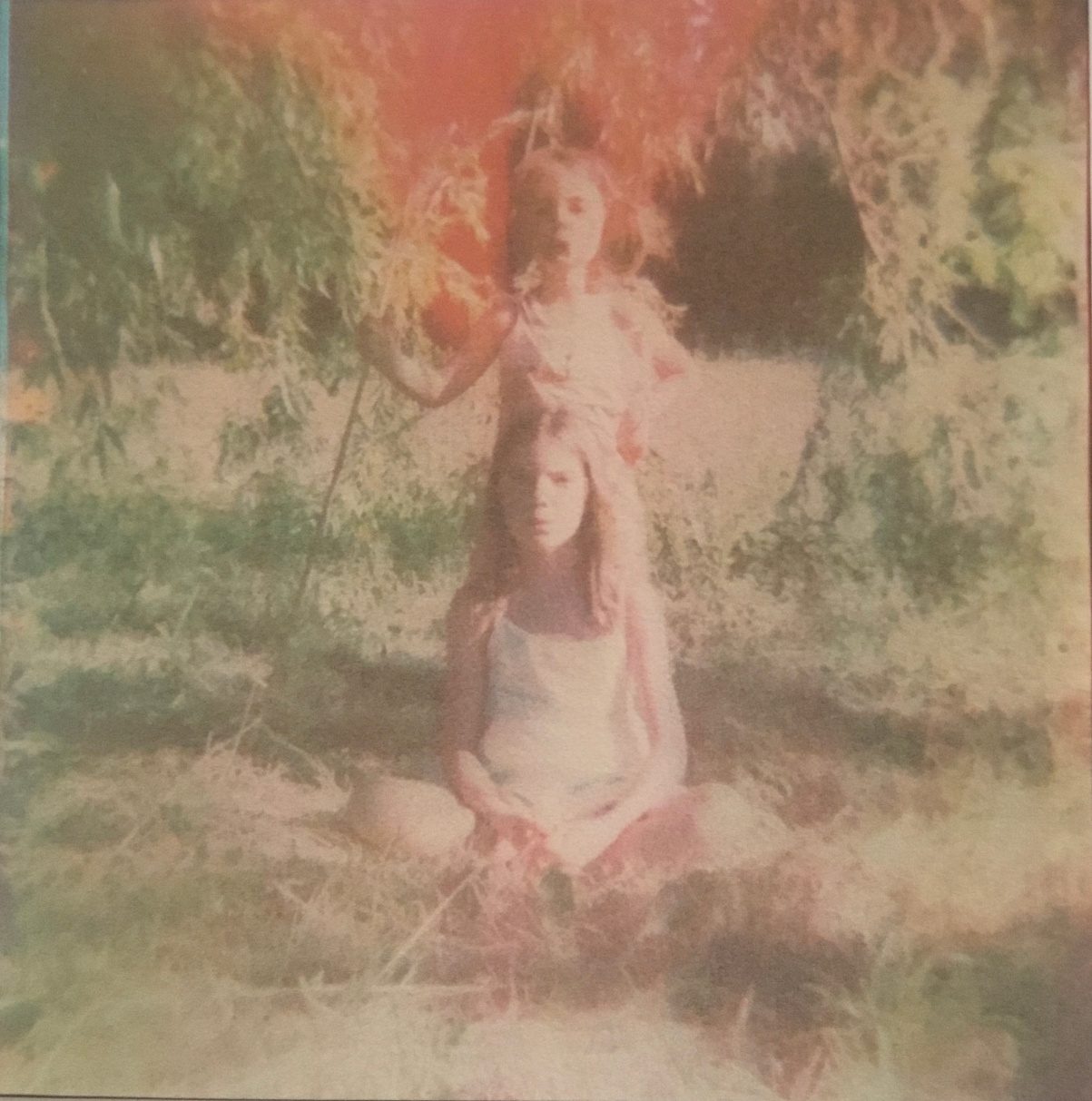
Epitaphe, gum bichromate print
How can the gum arabic photographic technique be explained briefly?
As with most historical techniques, prints are made by contact: the negative must be the same size as the desired image. There is no enlarger, which limits the size of the prints. The emulsion, a mixture of acacia gum, mineral pigments and sensitiser (potassium dichromate), is spread on paper
(previously shrunk in hot water, coated with pork gelatine, then hardened and dampened) in thin layers with a wide Japanese goat-hair brush.
After drying, the negative is pressed against the sheet and exposed to ultraviolet rays (direct sunlight or a UV exposure unit) for between 4 and 12 minutes (these are my exposure times; it can be much longer depending on the UV source, rarely shorter). Finally, the sheet is immersed in a bath of lukewarm, then cold, water. On the parts not exposed to UV the emulsion comes away from the support, while in the exposed areas it hardens, making the image appear after some forty minutes.
The operation is repeated, after drying and dampening, with another colour and another separation negative until the desired effect is obtained...
I became interested in historical photographic techniques, like many others, at the moment when the technique that had embodied photography for almost a century was on the way to becoming one historical technique among others, around 2004… The decline had begun earlier, but when telephones started taking photos, things really began to smell of the coffin for silver-based film... at least as a popular medium with no artistic intentions.
( Today the use of film endures thanks to its own qualities and to the wish of the younger generations to discover a “physical” photography. )
It therefore seemed opportune, like an opportunistic virus attacking a weakened body, to approach — not to say attack — photography from this technical and historical angle.
I liked the idea of using the same techniques as the Pictorialist photographers. They were fairly despised (notably for having neglected the social-realist aspect of photography), and recovering a share of that contempt did not displease me.
But the real interest of historical techniques lies above all in no longer depending on industry. .
No, not at all! First because making your photos yourself is very far from the “degrowth” spirit, since degrowthers recommend subcontracting as much as possible. For example, no longer having a freezer but buying your ice cubes and ice creams from the shopkeeper (the corner one, it goes without saying). Then, it is after all thanks to manufacturers that these photos exist: Epson, Kodak, Fuji, Canson, Lefranc-Bourgeois, and even Intel! But by varying sources and supply chains, one remains less dependent. One is not left stranded when a product is discontinued, like those who had to fill their fridge with SX-70 film when Polaroid stopped producing it! ( A company bought the patents and workshops; the film is available again )
No, if we must adopt a perspective, it is a survivalist one. In the event of catastrophe, in the midst of disaster, how do we go on producing images? Historical techniques offer a whole range of solutions... Likewise if images were banned.
Extrapolating a great deal, my answer is yes. I think a ban on a personal and private basis is to be envisaged. Large events of the circus, festival, day or night type would endure...
But the private production of images would be prohibited. Or at any rate supervised and regulated. I know this seems absurd, when today, through the internet, everyone can be both a producer and a distributor of images.
But that is precisely the point!
( This notion of supervision and limitation seems to be the one chosen in 2026 with the chat control law, ) And one need only try to imagine what lies behind the looks of hatred that certain pedestrians cast at the motor cars they pass to understand that it is not so absurd! ( a look of hatred that has not stopped growing and intensifying with the increasing number of cycle lanes, with bicycles and ...scooters )
What lies behind it is a form of animism: what they hate is not so much the motorist and what he may do as the object itself, a magical and evil object, which they fear sui generis and whose disappearance they wish for.
One might even consider that it has already begun, with numbers! Numbers? In Europe, in 2009, it is forbidden to display certain numbers in certain places. More precisely, two professional footballers in two European national leagues were forbidden to wear the numbers they had chosen for themselves, 69 and 88.
Of course it is anecdotal, and it was employers, not state bodies, who were behind the ban. But it was seriously considered that displaying these two numbers in a stadium constituted a threat to public order... However stupid the two footballers' motives may have been, the fact remains that the reaction of these officials foreshadows a “tightening of the legislation on the use of subversive, indecent and offensive numbers”.
A number is banned, a colour, then the depiction of a bearded man, and finally depiction itself.
( the list is too long and too dramatic)
And this is where “alternative photography” comes into its own, by making it possible to take photographs with anything and everything. So, science fiction rather than nostalgia?
Anticipation seems to me more accurate here, but there is something of that. And we can speak of science fiction if we imagine for a moment that these photos come from what photography might have been if a Lysenko had held its destiny in his hands, in place of German and Japanese industry
Uchronian photos or photos of anticipation: it is for you to decide!